


Colon Cancer Treatment in Bangalore

Overview – Colon Cancer Treatment in Bangalore

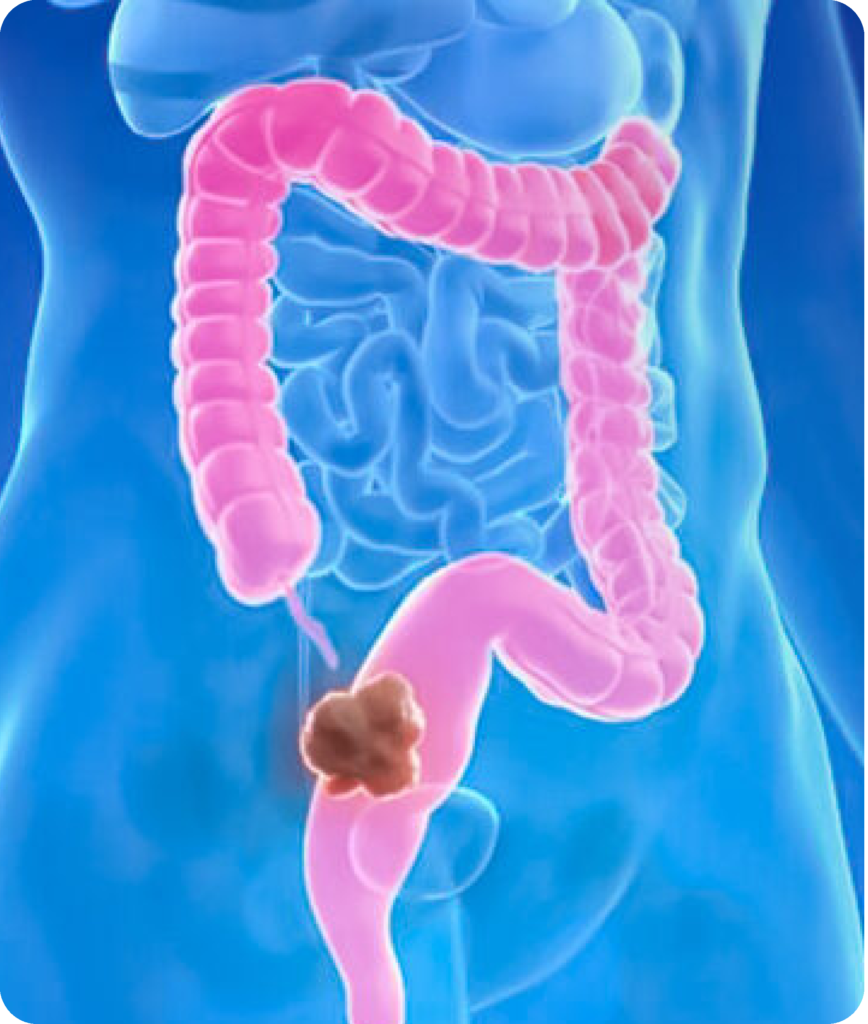
Colon cancer develops from uncontrolled growth of cells in the large intestine, often starting as polyps that can turn malignant over time. Early diagnosis proves essential because it boosts improves survival rates significantly, with stage I-III cases showing up to 86-95% three-year relapse-free survival in India.

Dr. Pavan Sugoor is a leading surgical oncologist in Bangalore specializing in advanced and minimally invasive colon cancer treatments, bringing over 16 years of expertise to patient care for effective outcomes.

Symptoms of Colon Cancer

Recognizing signs early aids timely intervention. Common early symptoms include:

  • Changes in bowel habits, some of it includes: 
    • Diarrhea, 
    • Constipation, 
    • or narrower stools lasting over days​
  • Rectal bleeding or blood in stool, appearing bright red or dark​
  • Black coloured stools
  • Persistent abdominal cramping or pain​
  • Feeling of incomplete bowel emptying​

Risk Factors in Colon Cancer

Lifestyle habits and genetic predispositions are known to increase the likelihood of developing colon cancer. Factors that may be changed or controlled are known as modifiable risk factors and include 

  • Red meat diets
  • Processed food
  • A lack of exercise, 
  • Being overweight (Obesity)
  • Drinking a lot of alcohol
  • And smoking

How to prevent colorectal cancer?

Get screened:

First colonoscopy recommended at age 50.
If you have a family history, start screening at age 40, or 10 years earlier than the age of diagnosis in your relative.
Early detection prevents progression and improves outcomes.

Be physically active:

At least 30 minutes of exercise most days.
Exercise reduces several cancer risks and prevents constipation, which is associated with colorectal cancer.

Avoid tobacco:

Tobacco causes cellular damage throughout the body — not only lung cancer.

Improve your diet:

A balanced diet helps directly and indirectly by providing nutrients and helping maintain healthy weight.

Dietary Recommendations

  • Increase fiber intake (both soluble and insoluble)
  • Soluble fibers act as prebiotics, supporting healthy gut bacteria
    Foods: legumes, garlic, onion, asparagus, jicama, broccoli, banana, apple, oats, wheat bran, leafy vegetables, colorful fruits/vegetables (green, orange, red, purple, white)
  • Drink plenty of fluids
  • Limit alcohol consumption
  • Reduce red meat intake 

Available Screening Tests & Recommendations

Screening helps detect cancer early, leading to better cure rates.

Screening options:

  • Fecal occult blood test — yearly from age 50
  • Colonoscopy — from age 50; if normal, repeat every 10 years

Types of Colon Cancer

Colon cancer is primarily made up of a subtype called adenocarcinoma (90-95% of cases), which develops from gland cells. It has several subtypes such as 

  • Adenocarcioma ( Most Common type)
  • Mucinous (a Type of adenocarcinoma ,have a large mucus content, refractory to treatment) 
  • Signet-ring cell adenocarcinomas (Aggressive variant of Adenocarcinoma, Often seen among young age group). 
  • Carcinoid tumors (slow-growing tumor, arises from hormone cells), 
  • Gastrointestinal stromal tumors (GISTs, arise in a type of connective tissue), 
  • And, Lymphomas (cancers of lymphatic tissue).

How Is Colon Cancer Diagnosed?

Diagnosis combines multiple approaches for accuracy.

  • Clinical examination: Physical checks for abdominal masses or rectal issues.
  • Colonoscopy visualizes the full colon and removes polyps.​
  • flexible sigmoidoscopy views lower colon.​
  • Imaging tests: CT scans, MRI, or PET for tumor size and spread
  • Laboratory tests: Fecal occult blood, FIT, or blood markers like CEA
  • Biopsy: Tissue sampling confirms cancer type post-endoscopy.​

Stages of Colon Cancer

The American Joint Committee on Cancer (AJCC) assigns a TNM classification (stage) of 0 through IV that helps guide a person’s prognosis based on how advanced their cancer is. 

  • Stage 0 means the cancer is still within its mucosal layer(s), 
  • Stage I means the cancer has invaded the submucosa and possibly some muscle tissue. 
  • Stage II cancers, the cancer has reached its outermost layer(s). 
  • Stages III and IV, there are nearby lymph nodes and eventually distant organs (e.g., liver) affected by the cancer.

Colon Cancer Treatment Options in Bangalore

Locally available options for treatment of colon cancer in Bangalore will include surgical resection and possibly a combination of chemotherapy and/or radiotherapy, depending on how far along the colon cancer has progressed. 

As such, in most cases, cancers that are diagnosed early will likely only require surgery in addition of  systemic chemotherapy or radiotherapy,  will be stage dependent

Surgery for Colon Cancer

Surgery for colon cancer either involves

Polypectomy: endoscopic guided removal of certain indicated polyps

Hemicolectomy: Right/ Left/ Transverse/ Sigmoidectomy/ Total Colectomy 

Benefits and recovery: Minimally invasive laparoscopic/robotic surgery avoids large incisions on the abdomen offering minimal discomfort & pain, early ambulation, early self care, quicker bowel function and early discharge from hospital. 

Other Treatment Approaches

There are other, non-surgical, treatment methods that can be used to treat advanced stages of colon cancer and/or patients who still have residual cancer cells after surgery, depending on stage of the tumor

 Some of these methods are as follows:

  • Chemotherapy before surgery is used to shrink or reduce the tumor 
  • Chemotherapy after surgery to take care of microscopic disease in the body 
  • Radiation: very rarely indicated  
  • Targeted therapy / Immunotherapy in selected patients 

Other Treatment Approaches

  • After surgery, surveillance is mandatory , so as to identify and treat the cancer if it grows back. All patients are encouraged to consult once in 3 months for the first 2 years and thereafter once in 6 months for 3 years and annually after 5th year. 
  • Blood test (Tumor marker-CEA) 
  • Imaging (Ultrasound/ Chest x ray/ CT scan/ PETCT ) every three-to-six months. 
  • Colonoscopy at 6 months or 12 months/ 3rd year/ 5th year
  • Rehabilitation focuses on 
  • improving nutritional habits
  •  increasing physical activity 
  • making lifestyle changes to decrease the chance of colon cancer recurrence through increased fibre intake in the diet and engaging in regular physical activity.

Why Choose Dr. Pavan Sugoor for Colon Cancer Treatment in Bangalore?

Dr. Pavan Sugoor, MS (General Surgery), MCh (Surgical Oncology), brings 16+ years expertise as Consultant Surgical Oncologist. Specializing in robotic & minimally invasive colorectal resections, cytoreductive surgeries, HIPEC, and pelvic exenterations, he leverages advanced technology through Robotic and Laparoscopic surgery for precise outcomes with compassion.

FAQ

TESTIMONIALS

Lorem ipsum dolor sit amet, consectetur adipiscing elit. Ut elit tellus, luctus nec ullamcorper mattis, pulvinar dapibus leo.

LATEST UPDATES & VIDEOS

Cart(0 items)

No products in the cart.