


Overview – Gall Bladder Cancer Treatment in Bangalore

Overview – Gall Bladder Cancer Treatment in Bangalore

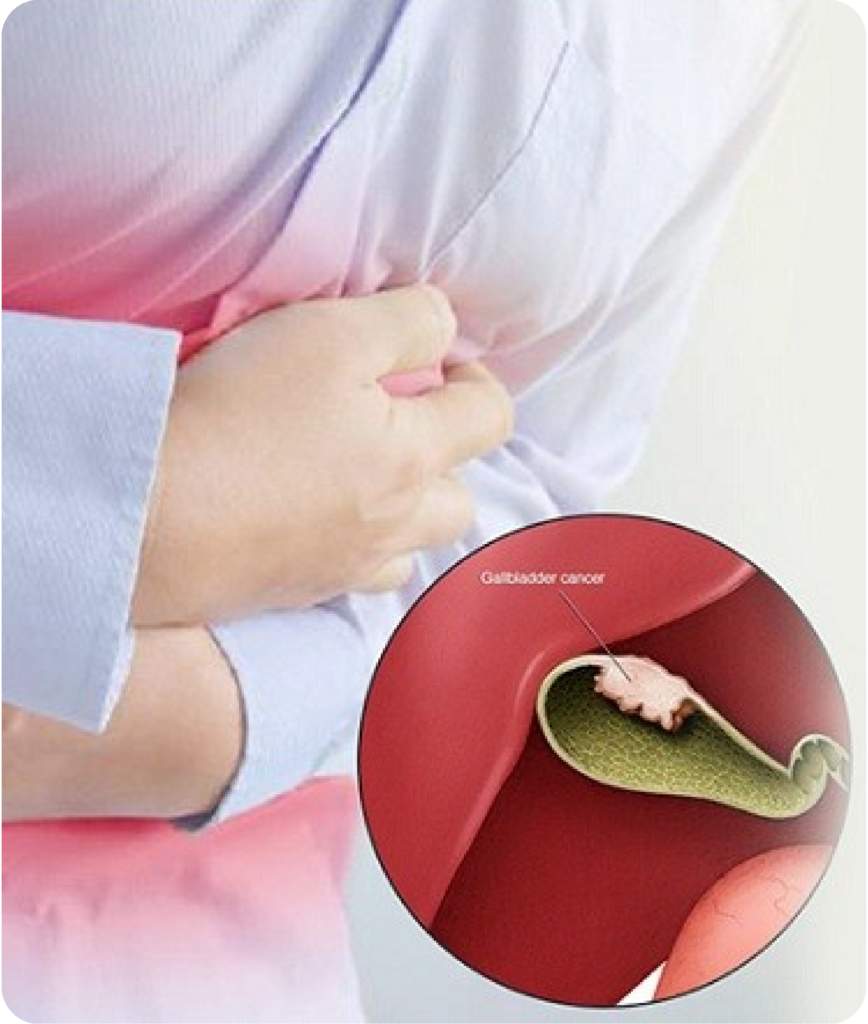
Gall bladder cancer arises from abnormal cell growth in the gallbladder, a small organ situated under the liver and stores the bile. Most often linked to chronic inflammation resulting in malignant transformation. Early diagnosis remains crucial as the survival for localised diseases is much higher than the advanced cases, which has shown poor 5-year survival. India bears 10% of global burden, with incidence up to 10.4/100,000 women in high-risk northern and eastern regions.

Specialized care in Bangalore enhances outcomes through multidisciplinary teams and advanced surgery. Dr. Pavan Sugoor, a leading surgical oncologist with over 16 years’ experience, excels in hepatobiliary procedures including radical cholecystectomy.​

Symptoms of Gall Bladder Cancer

Early symptoms may mimic gallstones symptoms, delaying detection.

  • Bloating or indigestion​
  • Nausea without vomiting​
  • Abdominal pain in upper right quadrant​

Advanced symptoms 

  • Jaundice (yellow discoloration of skin/eyes​)
  • Abdominal mass 
  • Unexplained weight loss, fever​

Risk Factors for Gall Bladder Cancer

Most gallstones occur because of chronic inflammation (70-90%) obesity 

Consumption of high fat/low fibre diets, Smoking

Medical conditions include porcelain gall bladder or Salmonella infection

Genetic inheritance through family history (polymorphisms) and increasing risk for women over 65 years old.

Types of Gall Bladder Cancer

There are several types of gall bladder cancer. 

  • Adenocarcinoma represents 90% of all gall bladder cancers and is caused by the glandular lining of the gall bladder. 
  • Squamous cell carcinomas are 1%-12% of all cases, arising from flat epithelial cells and frequently found at an advanced stage. 
  • There are also rarer forms of gall bladder cancer such as pint cell carcinomas and undifferentiated carcinomas.

How Is Gall Bladder Cancer Diagnosed?

  • A good clinical Clinical examination: Checks for Jaundice / abdominal mass
  • Laboratory tests: Tumor markers CA19-9, CEA; liver function
  • Imaging tests: Ultrasound detects wall thickening/polyps; CT/MRI assesses spread; PET-CT evaluates metastases.​
  • Biopsy: Fine-needle post-imaging confirms type.​
  • Advanced tools: Endoscopic ultrasound optional

Stages of Gall Bladder Cancer

TNM staging spans 0-IV. 

  • Stage 0 limits to mucosa
  • Stage I invades muscle
  • Stage II reaches perimuscular tissue
  • Stage III involves liver/lymph nodes
  • Stage IV spreads distantly. 

Gall Bladder Cancer Treatment Options in Bangalore

  • Here are the different treatment options for you to consider for gall bladder cancer. Treatment options depends on stage of cancer, resectability, General well-being, Performance status, Presence of Jaundice.
  • Surgery is advised after evaluating thoroughly with a CT scan and assessing the operability.  Surgery may be followed with adjuvant chemotherapy and or radiotherapy.

Surgery for Gall Bladder Cancer

  • Surgery can be approached by Open /laparoscopy or Robotic. Minimally invasive surgery is a suitable options which has shown superior outcomes in comparison to open approach.  

Types: 

  • Simple cholecystectomy for very early stage.
  • Radical Cholecystectomy: Removal of Gall bladder and Liver wedge with Lymph node dissection.
  • Extended resections are indicated in select group of patients 

Non-surgical Treatment Approaches

  • Chemotherapy (gemcitabine-cisplatin) to shrinks advanced tumors or following surgery for systemic control
  • Radiation may be combined with chemotherapy depending on the stage of the disease. 
  • Targeted therapy in few indicated cases.

Life After Treatment, Recovery & Follow-up Care

  • Monitoring includes with serial testing of  CA19-9 every 3 re monthly and complemented with CT Scan or PET CT
  • Rehabilitation stresses low-fat diet, exercise, Healthy lifestyle.

Why Choose Dr. Pavan Sugoor for Gall Bladder Cancer Treatment in Bangalore?

Dr. Pavan Sugoor, has received his MCh, surgical training from Tata Memorial hospital,  a high volume quaternary centre in Asia. He is an expert in GI-Hepatobiliary Oncological Surgery. He has standardised surgical techniques to have good outcomes. A safe Radical Cholecystectomy, Hepatectomy is been performed using a Minimally Invasive/Robotic Technique, resulting in significantly shorter recovery times due to the expertise he has developed through high volume procedures.

FAQ

TESTIMONIALS

Lorem ipsum dolor sit amet, consectetur adipiscing elit. Ut elit tellus, luctus nec ullamcorper mattis, pulvinar dapibus leo.

LATEST UPDATES & VIDEOS

Cart(0 items)

No products in the cart.