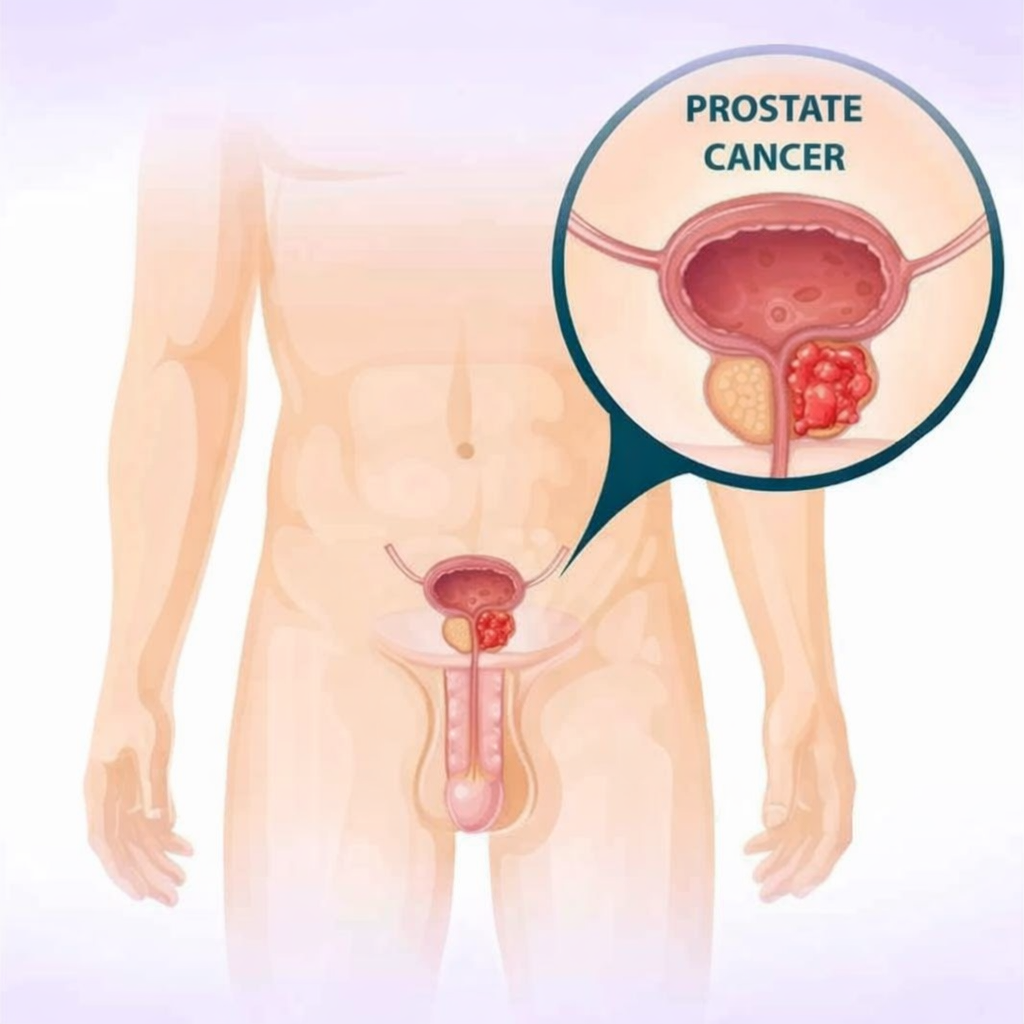
Prostate Cancer Treatment in Bangalore

Overview – Pancreatic Cancer Treatment in Bangalore

Prostate cancer is a kind of cancer, often found in a small-sized cancer below your bladder. In men, cancer begins in your prostate gland, which is in your little walnut-shaped body. The prostate is significant in the production of seminal fluid, which nourishes and carries sperm.

Prostate cancer tends to grow slowly, but some cancers are aggressive and spread rapidly if not treated early. Early prevention with timely therapy for prostatic cancer is important. In the early stages, prostate cancer can be relatively asymptomatic, and regular screening is particularly important for men over a certain age or at high risk.

Diagnosed early, prostate cancer is among the most treatable cancers and has excellent long-term survival rates. Prostate cancer is one of the most prevalent cancers afflicting men worldwide. Research has estimated that about 1 in 8 men could be diagnosed with prostate cancer, and the risk increases sharply after age 50.

Bangalore continues to be a popular choice for treatment options for prostate cancer because of the specialist uro-oncology services, the modern diagnostic methods, and the extensive treatments. Consultation with an expert and the patient, coupled with access to a state-of-the-art facility for early diagnosis or individualised treatment, significantly contributes to early treatment.


What Are the Symptoms of Prostate Cancer?

Include:

Early symptoms

  • At an early stage, prostate cancer can be very asymptomatic. They may include symptoms, such as:
  • Finding it hard to start urinating or wanting to stop
  • The urine flow can be consistently low or interrupted
  • Frequent urination, especially at night.
  • Pain or burning when urinating.
  • Blood in urine or semen. Advanced symptoms
  • As the cancer advances, symptoms may become more severe, including:
  • There is severe pain in the lower back, hips, or pelvis.
  • Erectile dysfunction.
  • Unexplained weight loss.
  • Fatigue.
  • If the cancer infiltrates the bones, it can cause pain.

What Are the Risk Factors for Prostate Cancer?

There are many factors that can raise the risk of a man developing prostate cancer:
  • Lifestyle-related risks
  • Obesity
  • Lack of physical activity
  • High in saturated fat and processed foods diet
  • Age-related risks
  • Risk increases dramatically in the post–50 years age group
  • Incidence is higher in men older than 65 years
  • Genetic or hereditary risks (BRCA mutations, family history)
  • Family history of prostate cancer
  • Mutations in both the BRCA1 and BRCA2 genes
  • Inherited cancer syndromes
  • Medical conditions that increase risk
  • Hormonal imbalances Chronic inflammation of prostate
  • Environmental or dietary contributors
  • Exposure to certain chemicals
  • A diet low in fruits, vegetables, and antioxidants
  • Family history of prostate cancer
  • Mutations in both the BRCA1 and BRCA2 genes
  • Inherited cancer syndromes
  • Medical conditions that increase risk
  • Hormonal imbalances Chronic inflammation of prostate
  • Environmental or dietary contributors
  • Exposure to certain chemicals
  • A diet low in fruits, vegetables, and antioxidants

Types of Prostate Cancer

Describe in patient-friendly language:

  • Adenocarcinoma (most common)
    Developing from glandular cells. The most common type of prostate cancer. Most prostate cancers fall into this category.
  •  Small cell carcinoma
    Rare, however aggressive form that grows rapidly and needs prompt treatment.
  • Neuroendocrine tumors
    Rare tumours with unusual behaviour, as compared to normal prostate cancers, typically need specialised treatment.
  •  Transitional cell carcinoma
    Transitional cell carcinoma begins in the cells lining the urethra and has the potential to spread to the prostate.
    ⦁ Other rare subtypes
    Examples include sarcomas and other uncommon variants, which are most often diagnosed and treated individually.

How Is Prostate Cancer Diagnosed?

Break into subsections:

  • Clinical examination (DRE)

Gives physician access to prostate size and can detect abnormalities. 


  • Imaging tests (Ultrasound, MRI, CT, PET-CT)

Ultrasound. MRI scan. CT scan. PET-CT for advanced or recurrent disease. 

  • Laboratory tests (PSA, blood tests)


Blood Test Prostate specific antigen (PSA). More blood tests to determine general health.

  • Biopsy (needle biopsy, targeted biopsy)

Needle biopsy. Imaging guidance for targeted biopsy.

  • Advanced diagnostic tools (MRI-guided biopsy, genomic tests

MRI-guided biopsy. Genomic and molecular analysis to determine cancer aggressiveness.

Stages / Severity Levels of Prostate Cancer

Prostate cancer ranges from stage I to stage IV:

  • Staging system (Stage I–IV)

Stage I: cancer localised to the prostate and not evolving quickly.

Stage II: Cancer is still confined to the prostate but is more advanced. 

Stage III: Cancer has spread beyond the prostate and into tissues close by with its progression. 

Stage IV: Cancer has spread as far out as to other people’s organs, like bone or lymph nodes. 

  • Gleason Score / Grade Group system (Grade 1–5)

The Gleason Score / Grade Group system (Grades 1 to 5) measures how aggressive the cancer cells appear under a microscope. 

  • What each stage and grade means

Higher grades reflect more aggressive disease, while lower grades indicate slower growth. 

  • How staging influences treatment and prognosis

Together, staging and grading guide doctors to choose an effective treatment option and predict prognosis. 

Prostate Cancer Treatment Options in Bangalore

Include an overview of:

  • Full range of available treatment modalities
  • How treatment varies by stage, aggressiveness, and patient health

  • Availability of advanced prostate cancer therapies in Bangalore

Bangalore provides an extensive prostate cancer treatment, which includes:

  • Active surveillance in low-risk cases. 
  • Surgery
  • Radiation therapy
  • Hormone therapy
  • Chemotherapy
  • Targeted and immunotherapies

The selection of treatment depends upon the stage of the cancer, the aggressiveness, the age of the patient, the overall health status, and the individual’s preferences. More sophisticated prostate cancer therapies in Bangalore are available thanks to multidisciplinary oncology teams. 

Surgery for Prostate Cancer

Include:

  • Types of surgeries (radical prostatectomy, robotic-assisted surgery, laparoscopic surgery)
  • When surgery is recommended
  • Benefits of surgical treatment
  • Expected recovery timeline

  • Radical Prostatectomy
  • Robotic-Assisted Prostate Surgery
  • Laparoscopic Prostate Surgery
  • Both localised prostate cancer and select local advanced diseases are frequently treated surgically. 

Advantages Of Surgery

  • All cancerous tissue is removed during surgery. 
  • The early stages have high cure rates. 
  • Minimally invasive methods with highly precise cancer control 
  • Expected Recovery Timeline. 

Most patients recover within a few weeks, with increased urinary and sexual function and gradual rehabilitation. 


Other Treatment Approaches

Cover all relevant non-surgical options:

  • Medication/drug therapy
  • Chemotherapy
  • Radiation therapy (external beam, brachytherapy)
  • Hormone therapy (androgen deprivation therapy)
  • Targeted therapy
  • Immunotherapy
  • Minimally invasive treatments (cryotherapy, HIFU)

  • Medication / Drug Therapy. Chemotherapy. Radiation Therapy: External beam radiation and brachytherapy. Hormone Therapy (Androgen Deprivation Therapy)
  • Targeted Therapy
  • Immunotherapy
  • Therapies as Minimally Invasive as Possible
  • Cryotherapy and HIFU

Depending on the disease stage, these therapies may only be used individually or in combination.

Life After Treatment / Recovery & Follow-up Care

Cover all relevant non-surgical options:

  • Medication/drug therapy
  • Chemotherapy
  • Radiation therapy (external beam, brachytherapy)
  • Hormone therapy (androgen deprivation therapy)
  • Targeted therapy
  • Immunotherapy
  • Minimally invasive treatments (cryotherapy, HIFU)


  • Medication / Drug Therapy. Chemotherapy. Radiation Therapy: External beam radiation and brachytherapy. Hormone Therapy (Androgen Deprivation Therapy)
  • Targeted Therapy
  • Immunotherapy
  • Therapies as Minimally Invasive as Possible
  • Cryotherapy and HIFU

Depending on the disease stage, these therapies may only be used individually or in combination.

Why Choose BangaloreDoctor / Clinic NameBangalore for Prostate Cancer Treatment in Bangalore?

  • Extensive expertise in the management of prostate cancer. 
  • Specialised training in oncology and uro-oncology. 
  • Advanced minimally invasive and robotic technologies. 
  • Demonstrated patient results and individualised care. 
  • Local Bangalore patients can easily access these technologies. 

FAQ

TESTIMONIALS

Lorem ipsum dolor sit amet, consectetur adipiscing elit. Ut elit tellus, luctus nec ullamcorper mattis, pulvinar dapibus leo.

LATEST UPDATES & VIDEOS

Cart(0 items)

No products in the cart.