


Thyroid Cancer Treatment in Bangalore

Overview – Thyroid Cancer Treatment in Bangalore

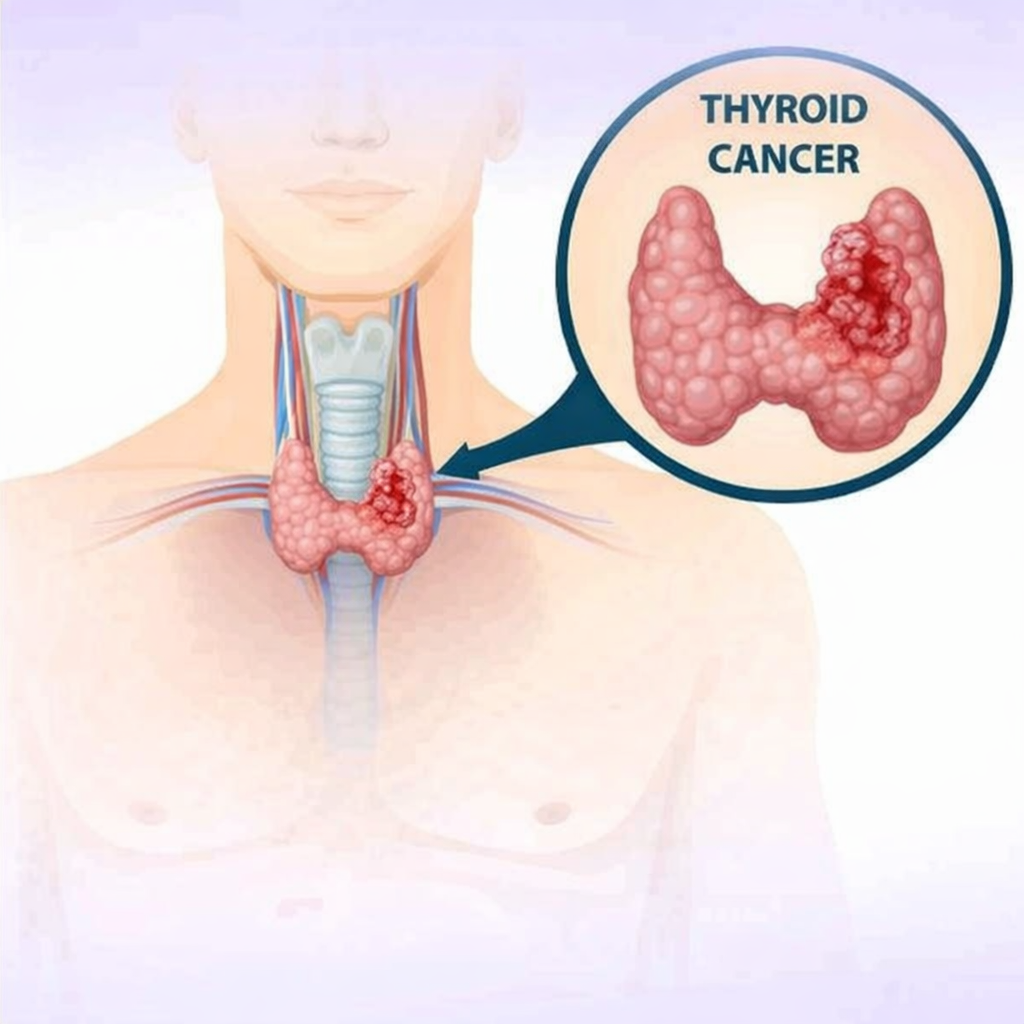
Thyroid cancer occurs when cells grow abnormally in the thyroid gland (the small butterfly-shaped gland at the base of the neck). It is an important organ in the body that regulates metabolism, heart rate, body temperature and hormonal balance. Thyroid cancer is usually thought to be one of the easier cancers to treat, but early diagnosis and treatment are very important for the best results.

Thyroid cancers often develop slowly, and symptoms may not exist at their early stages. However, if left untreated, certain types can become aggressive and spread to nearby lymph nodes or outlying organs. Early diagnosis leads to quicker treatment, minimises complications, and increases the chance of survival.

Bangalore offers top-notch thyroid cancer care, utilising modern diagnostic methods, employing skilled professionals, and providing an end-to-end healthcare system within the city. The patient is also treated in a multimodal manner, including the surgical technique, nuclear medicine and targeted therapy, to tailor one’s treatment plan for the patient.

What Are the Symptoms of Thyroid Cancer?

Early detection of symptoms can help the doctors to diagnose quickly and treat. Some common warning signs are:

  • A painless lump or swelling in the neck
  • Difficulty swallowing
  • Hoarseness or voice changes
  • Persistent sore throat
  • Neck pain that could radiate to the ears
  • Enlarged neck lymph nodes
  • Suffering from shortness of breath in advanced cases

Many thyroid nodules are benign, but if a lump remains or grows, he should see a specialist. 

What Causes Thyroid Cancer?

The exact cause of thyroid cancer is not always known. Many conditions increase the risk of developing the disorder. Some of these are –

Common Causes and Risk Factors

  •   Genetic alterations to thyroid cells
  •   Previous family history of thyroid carcinoma
  •   Exposure to high levels of radiation, especially in childhood
  •   Certain inherited genetic syndromes
  •   Iodine imbalance in the diet
  •   Hormonal influences particularly prevalent in women
  •   Pre-existing thyroid problems such as goitre or thyroid nodules

Understanding risk factors can identify those who might benefit from closer monitoring or even early screening. 

Types of Thyroid Cancer

Thyroid cancer is classified based on how the cancer cells look under a microscope and how they behave.

Papillary Thyroid Cancer – It is the most common type of thyroid cancer, making up the majority of cases. Normally, it grows slowly and responds well to treatment.

Follicular Thyroid Cancer – Somehow slightly more aggressive than papillary cancer, but still very treatable in the early stages of development.

Medullary Thyroid Cancer – Develops from parafollicular cells; can be linked to inherited genetic conditions.

Anaplastic Thyroid Cancer – A potentially lethal form of the disease that is rare but aggressive and rapidly grows and needs urgent specialised treatment.

Treatments for each type will depend on its behaviour and stage. 

How Is Thyroid Cancer Diagnosed?

Diagnosis of thyroid cancer is a combination of clinical assessment and advanced diagnostic exams.

Physical Examination – The doc examines the neck for lumps, swelling or swollen lymph nodes.

Blood Tests – Blood tests measure thyroid hormone levels and can help identify abnormal thyroid function.

Ultrasound – The neck ultrasound helps to evaluate thyroid nodules and surrounding lymph nodes.

FNAC (Fine Needle Aspiration Cytology) – A minimally invasive procedure in which a small sample of cells is removed from the thyroid nodule to be examined.

Radioiodine Scan – In specific cases, this test is used to assess activity of thyroid tissue and spread of cancer.

CT or MRI – If there is concern about spread of the disease beyond the thyroid gland, advanced imaging is recommended. 

Thyroid Cancer Staging

Staging may help quantify how far the cancer has spread and also can guide treatment planning.

Typical Stages of Thyroid Cancer

  •   Stage I: Cancer confined to the thyroid gland
  •   Stage II: Tumour which is larger but still localised
  •   Stage III: Widespread in nearby lymph nodes or surrounding tissues
  •   Stage IV: Spread to distant organs like lungs or bones

Staging takes into account tumour size, lymph nodes, age of patient and cancer type. Thyroid cancer at early stages can usually result in a good prognosis. 

Thyroid Cancer Treatment Options in Bangalore

The treatment options for thyroid cancer vary according to the patient’s type, stage and overall health. Bangalore offers easy access to advanced cancer treatment options, including:

  • Surgery
  • Radioactive iodine therapy (RAI)
  • Thyroid hormone therapy
  • Targeted therapy
  • Chemotherapy
  • External beam radiation therapy, if recommended.

A personalised treatment plan will help control cancer effectively with fewer long-term side effects. 

Surgery for Prostate Cancer

Include:

  • Types of surgeries (radical prostatectomy, robotic-assisted surgery, laparoscopic surgery)
  • When surgery is recommended
  • Benefits of surgical treatment
  • Expected recovery timeline

  • Radical Prostatectomy
  • Robotic-Assisted Prostate Surgery
  • Laparoscopic Prostate Surgery
  • Both localised prostate cancer and select local advanced diseases are frequently treated surgically. 

Advantages Of Surgery

  • All cancerous tissue is removed during surgery. 
  • The early stages have high cure rates. 
  • Minimally invasive methods with highly precise cancer control 
  • Expected Recovery Timeline. 

Most patients recover within a few weeks, with increased urinary and sexual function and gradual rehabilitation. 


Surgery for Thyroid Cancer

Surgery for Thyroid Cancer- The treatment of choice for most thyroid cancers is surgery.

Total Thyroidectomy – Removal of the thyroid gland completely (often recommended in cases of cancers of the larger thyroid or several cysts).

Partial Thyroidectomy – Removal of only the part of the thyroid that needs to be removed, in selected low-risk patients.

Dissection of the Neck Lymph Node – Excision of lymph nodes contaminated with cancer, where the spread of cancer is present.

Today’s surgery helps preserve vital tissues, minimise complications, and promote quicker healing. 

Life After Thyroid Cancer Treatment

Life after treatment of thyroid cancer is long-term care and monitoring to maintain a healthy lifestyle.

Key Issues in the Rehabilitation and Follow-up

  •   Lifelong thyroid hormone replacement therapy if you have had your thyroid removed.
  •   Consistent blood tests to be able to check hormone levels.
  •   Examine patients for their recurrence and take routine imaging and scans.
  •   Dietary advice to achieve hormonal homeostasis.
  •   Lifestyle changes and regular exercise can help you maintain a healthy lifestyle.
  •   Support for psychological & emotional growth for later life is beneficial.

With proper follow-up, most patients live normal, healthy lives after treatment. 

Why Choose Dr Pavan Sugoor for Thyroid Cancer Treatment in Bangalore?

In Bangalore for thyroid cancer care in patients at Bangalore for such treatment options because of the following reasons:

  • Specialists in thyroid and endocrine oncology
  • Specialised surgical and non-surgical treatment options
  • Technology in advanced diagnostic and treatment
  • The multidisciplinary care for personalised treatment
  • Validated patient outcomes and loving treatment
  • Simple, convenient accessibility for patients throughout Bangalore and the surrounding areas. 

FAQ

TESTIMONIALS

Lorem ipsum dolor sit amet, consectetur adipiscing elit. Ut elit tellus, luctus nec ullamcorper mattis, pulvinar dapibus leo.

LATEST UPDATES & VIDEOS

Cart(0 items)

No products in the cart.