

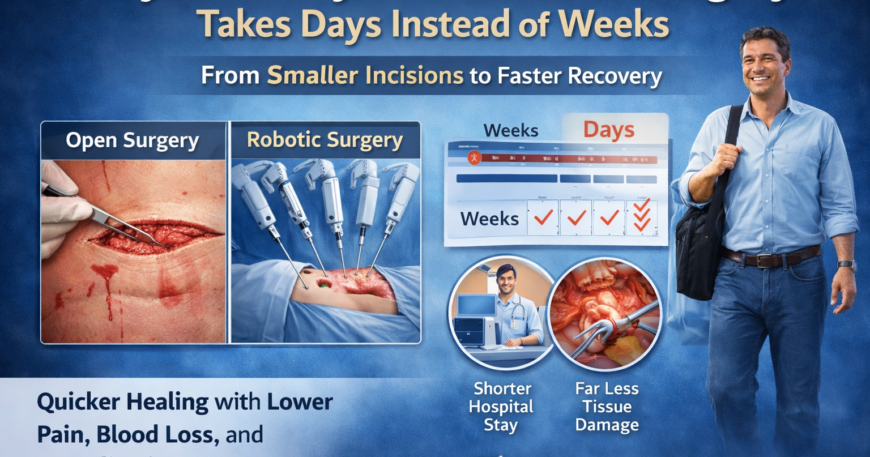
Why Recovery From Robotic Surgery Takes Days Instead of Weeks

One of the most common and genuinely my favourite questions patients ask me: how is it possible that recovery after robotic surgery is so quick?
For decades, surgery was almost synonymous with long scars, extensive pain and weeks of forced rest. Traditional open surgery required large incisions, significant tissue handling and prolonged healing time. Foe many this meant putting life on hold-family, responsibilities, work, everything.
Robotic surgery has transformed this landscape. It has transformed not just how we operate, but how patients heal and return to their lives. As a surgeon who sees this transformation every day, I can confidently say: the difference is remarkable. Recovery after robotic-assisted surgery usually takes just a few days.
But what exactly makes robotic surgery so efficient?
Here’s a detailed look at why patients heal faster — supported by the science behind minimally invasive surgery and enhanced surgical precision.
1. Smaller Incisions = Faster Wound Healing
One of the biggest reasons for rapid recovery is the use of tiny keyhole incisions. Traditional open surgery involves large cuts that take weeks to heal. In contrast, robotic surgery uses 5–8 mm ports, significantly reducing tissue trauma.
Benefits:
- Lower postoperative pain
- Reduced infection risk
- Minimal scarring
- Shorter hospital stay
High Precision Minimizes Tissue Damage
Robotic systems filter hand tremors and translate movements into precise micro-actions. This ensures that surrounding organs, blood vessels, and nerves are preserved with exceptional accuracy.
What this means for patients:
- Less inflammation
- Reduced blood loss
- Lower complication rates
- Quicker return to daily activities
3. Superior 3D Vision Enhances Surgical Safety
Robotic platforms offer a 3D, high-definition, and magnified view of the surgical field. This allows surgeons to operate with unmatched clarity, especially in deep or narrow areas like the pelvis.
4. Less Pain = Early Mobilisation
Because robotic surgery causes minimal trauma, patients experience significantly lower postoperative pain, which means they can start walking, eating, and resuming light activities quickly.
Advantages:
- Lower dependency on pain medications
- Reduced risk of blood clots
- Faster functional recovery
5. Reduced Blood Loss and Fewer Complications
Most robotic procedures result in minimal blood loss. Smaller incisions and precise movements also reduce surgical-site complications such as infections, seromas, and hernias.
6. Lower Physiological Stress on the Body
Robotic-assisted surgery triggers a much lower stress response compared to open surgery. This means quicker return of:
- Gut function
- Immunity
- Energy levels
7. Better Outcomes in Complex Anatomical Areas
Robotic systems excel in challenging regions like the pelvis (as in rectal cancer surgery). Enhanced mobility and precision lead to better nerve preservation and quicker restoration of bladder and bowel function.
Final Thoughts
The reason robotic surgery recovery time is shorter is simple: the body endures far less trauma. From tiny incisions and precision instruments to reduced pain and fewer complications, robotic-assisted procedures offer a smoother and faster path to healing.
